

Joint pain can significantly impact your quality of life, limiting mobility and making everyday activities more difficult. For patients considering joint replacement, advances in surgical technology now allow for a more precise, personalized approach than ever before.
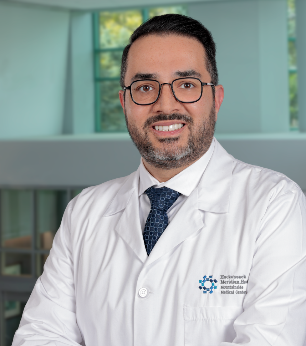
At Mountainside Medical Center, patients have access to advanced orthopedic care through specialists like Mikhail Khaimov, D.O., a board-certified orthopedic surgeon specializing in hip and knee replacement surgery. Dr. Khaimov utilizes advanced robotic-assisted joint replacement technology, including the Mako System by Stryker, to enhance surgical accuracy and improve long-term joint function.
What is robotic-assisted joint replacement surgery?
Robotic-assisted joint replacement surgery combines minimally invasive surgical techniques with advanced imaging and computer-guided technology to assist surgeons in performing highly precise procedures.
Robotic surgery offers many benefits compared to traditional surgery, including:
- Enhanced precision for implant placement
- Greater preservation of healthy bone and tissue
- Improved alignment and balance of the joint
- Real-time data and feedback to the surgeon during the procedure
“Robotic-assisted technology allows us to tailor each joint replacement to the individual patient,” said Dr. Khaimov. “This can lead to better function and longer-lasting results.”
Who is a candidate for robotic joint replacement?
Robotic-assisted joint replacement is commonly used for patients who have not found relief through non-surgical treatments, such as physical therapy, medications or injections. It is commonly used for:
- Individuals experiencing chronic hip or knee pain
- Patients with advanced osteoarthritis
- Patients whose symptoms are affecting their quality of life
- Patients experiencing decreased mobility or function
Many patients are referred for evaluation after non-surgical treatments are no longer effective.
What happens before surgery?
Your orthopedic surgeon will conduct a comprehensive evaluation. This may include detailed imaging, such as CT scans or X-rays, a review of your medical history, a physical examination and a discussion of treatment goals.
Your surgeons uses this information to create a customized surgical plan, allowing for precise implant sizing, alignment and positioning prior to entering the operating room.
What to expect during the procedure
The surgeon uses a robotic arm to guide implant placement based on the preoperative plan. The MAKO system will provide real-time data and feedback for increased precision while allowing the surgeon to make adjustments as needed. The robotic system does not perform the surgery independently, and the surgeon remains in full control throughout the procedure.
“The technology enhances precision, but it’s the surgeon’s expertise that drives the procedure,” said Dr. Khaimov. “Together, this combination helps optimize outcomes for patients.”
Recovery and post-surgical rehabilitation
Recovery after robotic-assisted joint replacement varies by patient, but it is often faster and less painful compared to traditional methods. Patients may experience:
- A faster return to daily activities
- Improved joint function
- Reduced postoperative pain
- Potentially shorter hospital stays
Physical therapy is a key step in your recovery. This includes rehabilitative exercises, helping to restore strength, flexibility and mobility to the replaced joint.
Benefits of choosing advanced orthopedic care
Choosing a skilled orthopedic surgeon and a facility equipped with advanced technology can make a significant difference in your outcome.
At Mountainside Medical Center, patients benefit from:
- Access to experienced specialists
- Comprehensive orthopedic services
- Personalized treatment plans
- State-of-the-art robotic-assisted technology
In addition to joint replacement surgery, Dr. Khaimov provides general orthopedic care, fracture treatment and thorough evaluations with specialty referrals when needed. He evaluates patients with hip and knee arthritis, failed conservative treatment and fracture-related conditions, offering timely consultations and clear communication throughout the course of care.
Why robotic-assisted surgery matters
If you are considering joint replacement surgery, consulting with a specialist experienced in robotic-assisted techniques can help you make an informed decision and achieve the best possible results.
Click the button below to schedule a consultation with Dr. Mikhail Khaimov.