

Joint replacement is a big decision. It’s one that requires careful thought about your pain, your personal goals and what recovery will look like. It can have a meaningful impact on your mobility, independence and overall quality of life, so it’s important to feel confident in your choice.
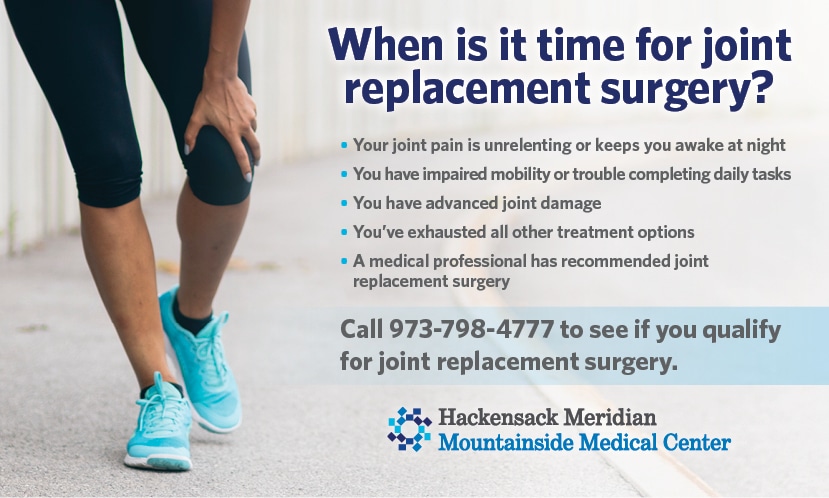
There are a few things you can take into consideration and ask yourself to determine if now is the right time for surgery.
- Have you tried (and failed) all appropriate non-surgical options?
- This could include physical therapy, medications, injections or assistive devices.
- Is your joint pain significantly affecting your daily life?
- Think about if the pain keeps you from sleeping, working, walking or other activities.
- Are you healthy enough for surgery?
- Take into consideration conditions like heart disease, diabetes, obesity or other risk factors.
- Will you regain full mobility or reduce pain?
- Understanding realistic expectations will set you up for success.
- Will you be able to manage the recovery process?
- Recovery can take a significant amount of time – weeks to months, in some cases. You’ll need rehabilitation, physical therapy and potentially home assistance.
If you answered yes to three or more of these questions, consider the following:
- Risk vs. benefits
- Benefits include pain relief, restored or improved mobility and/or better quality of life
- Risks include infection, blood clots, implant failure and/or a need for revision surgery
- Longevity of the implant
- Most joint replacements last 15 to 25 years, so younger patients may need additional surgery later in life
- Activity impact after surgery
- You may need to avoid high-impact activities like running or jumping, but may be able to return to walking, swimming, golf, etc.
- Financial and time commitments
- Cost (even with insurance), time off work, rehabilitation and follow-up appointments, both long-term and short-term
- Support system and home setup
- Recovery is easier with the help of family or friends. You may need assistance with daily tasks or mobility aids like a walker, support in the bathroom, etc.
A deep understanding of what goes into joint replacement surgery and recovery is crucial to making sure it is the right option for you.
If you answered “no” to these questions or are uncertain about other factors of joint replacement, now may not be the right time for surgery. There are many non-surgical routes you can take to treat joint pain.
When you’re ready, talk to your orthopedic specialist. They can tell you what to expect and help prepare you for the next steps toward joint pain relief.
Knowing which treatment option for joint pain is right for you can help you get back to the life you want to live.