
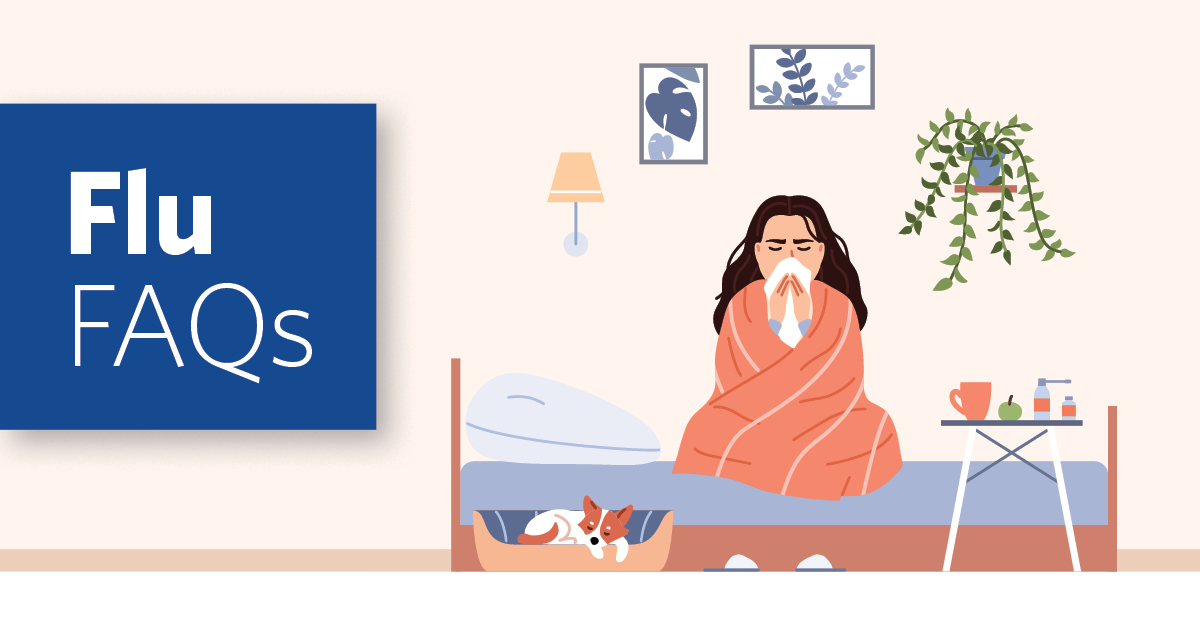
Influenza (“the flu”) can be more than a nasty seasonal bug. In some severe cases, the respiratory illness can cause serious complications, especially in older adults, younger children and other more vulnerable populations. Symptoms of the flu include fever, chills, coughing, sore throats, fatigue, and sometimes vomiting or diarrhea.
Although it’s a relatively common illness, facts about the flu can sometimes be unclear. Read some of the most frequently asked questions about the flu below.
How is the flu different from a cold?
There are a variety of viruses that can cause a cold, but the flu is caused by influenza viruses. Flu symptoms are typically sudden and more severe, commonly with fever, body aches and fatigue. Colds are usually milder and mostly affect the nose and throat.
How long does the flu last?
Most people recover within a few days to two weeks. However, fatigue and weakness can sometimes last longer, and some people may develop complications such as pneumonia.
How does the flu spread?
The flu spreads mainly when an infected person coughs, sneezes or talks, respiratory droplets are released, and someone else touches them. They can become infected if they touch a contaminated area and then their eyes, nose or mouth.
I think I have the flu. When should I see a doctor?
If you suspect the flu, see a doctor. They can give you a test to confirm whether or not you have the flu, and get you started on medication if necessary.
Most cases of the flu take about two weeks to go away completely. Signs that the flu is getting worse can include:
- Chest pain
- Difficulty breathing
- Persistent high fever
- Severe dehydration
- Worsening symptoms
Why do I need to get the flu shot every year?
There are two main reasons to get an annual flu shot:
- The flu virus changes. There are different strains of the influenza virus, and they can change from year to year. The annual flu vaccine is developed according to which strain experts expect to see in the upcoming flu season.
- Your immunity changes. Over time, you naturally lose immunity to the virus. Combined with the changes in the virus strain, this may mean your last vaccine isn’t enough to protect you from getting the flu.
When should I get vaccinated?
The best time to get vaccinated is before flu season begins, typically in September or October.
How can the flu be treated?
It’s best to try to prevent the flu through vaccination and proper hygiene. Once a patient contracts the flu, common at-home treatments include:
- Staying hydrated by drinking plenty of water, clear broth and herbal tea.
- Getting plenty of rest. Sleep allows your immune system to fight the virus effectively.
- Gargling with warm salt water, using saline nasal drops or breathing in steam to relieve a sore throat.
- Taking over-the-counter NSAIDs like ibuprofen or acetaminophen to reduce pain and fever.
There is a common misconception that antibiotics can treat the flu; antibiotics can only treat bacterial infections, not viral ones.
Will the flu shot give me the flu?
No, it will not. You may experience side effects like soreness or fatigue after receiving the vaccine, but these are not the flu.
Be a flu fighter; stay ahead of sickness by getting your flu vaccine. Schedule a visit with your primary care provider today.